A Tale of Eternal Consequences and Present Choices - The Parable of the Rich Man and Lazarus
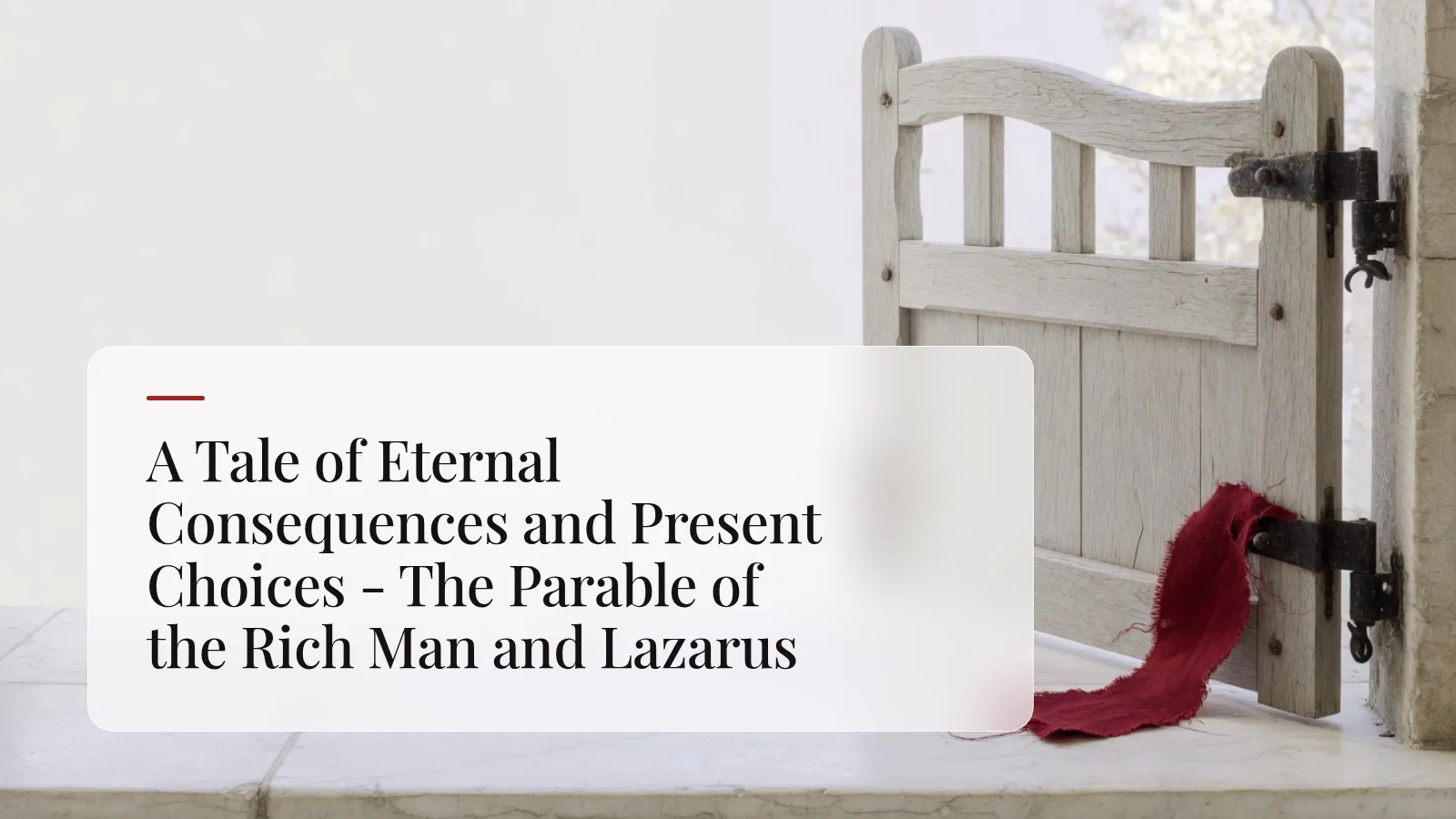
"There was a certain rich man who was clothed in purple and fine linen and fared sumptuously every day. But there was a certain beggar named Lazarus, full of sores, who was laid at his gate" (Luke 16:19-20)
As believers in Christ, we must grasp the profound depths of this parable our Lord Jesus shared. It pierces through the superficial layers of our modern existence and exposes the eternal consequences of our daily choices. Within this divine teaching, we find more than a simple lesson about generosity - we encounter a sobering revelation about the state of our souls.
Our Lord paints a vivid picture of two lives intersecting at a gate - a physical boundary that represented a much deeper spiritual chasm. The rich man, adorned in purple and fine linen (as we might wear our prestigious brands today), lived in abundant comfort while Lazarus, whose very name points us to divine dependence, suffered in plain sight. How this mirrors our present reality, where countless souls lie in need while we feast behind our walls of prosperity!
Yet, as Scripture reveals, this narrative transcends mere social commentary. The core message strikes at the heart of our spiritual condition - a blindness that, if left unchecked, leads to eternal separation from God. When death drew its final curtain, we see the dramatic reversal that aligns with our Lord's teaching: "But many who are first will be last, and the last first" (Matthew 19:30).
The rich man's eternal anguish serves as a powerful testimony to the words of our Lord Jesus when He said, "For what profit is it to a man if he gains the whole world, and loses his own soul?" (Matthew 16:26). His desperate plea for his brothers' salvation reveals the insufficient nature of miraculous signs. As Abraham declared, they had Moses and the prophets - just as we have the complete revelation of God's Word today.
As followers of Christ, we must understand:
- Our response to those in need reflects the genuine state of our faith - as James reminds us, "Faith without works is dead" (James 2:26)
- Material abundance can create a spiritual cataract, blocking our vision of both eternal truths and the suffering around us
- The sufficiency of Scripture stands - we have been given all we need for life and godliness through His divine power (2 Peter 1:3)
- Our present choices carry eternal weight - there is no opportunity for repentance beyond the grave
In our age of unprecedented wealth and technological advancement, this teaching of our Lord speaks with particular urgency. The gates that separate us from the Lazaruses of our world may have evolved - they might be digital barriers, busy schedules, or social distances - but they remain just as real.
The Spirit of God compels us to examine ourselves: Will we recognize the eternal significance of our daily choices? For truly, this parable speaks not merely of a rich man and a beggar from long ago, but of each one of us and the eternal implications of how we live in light of God's truth today.